The Yorkshire Arts Association – Foundations 1970s – Part 6 – Access and Distribution
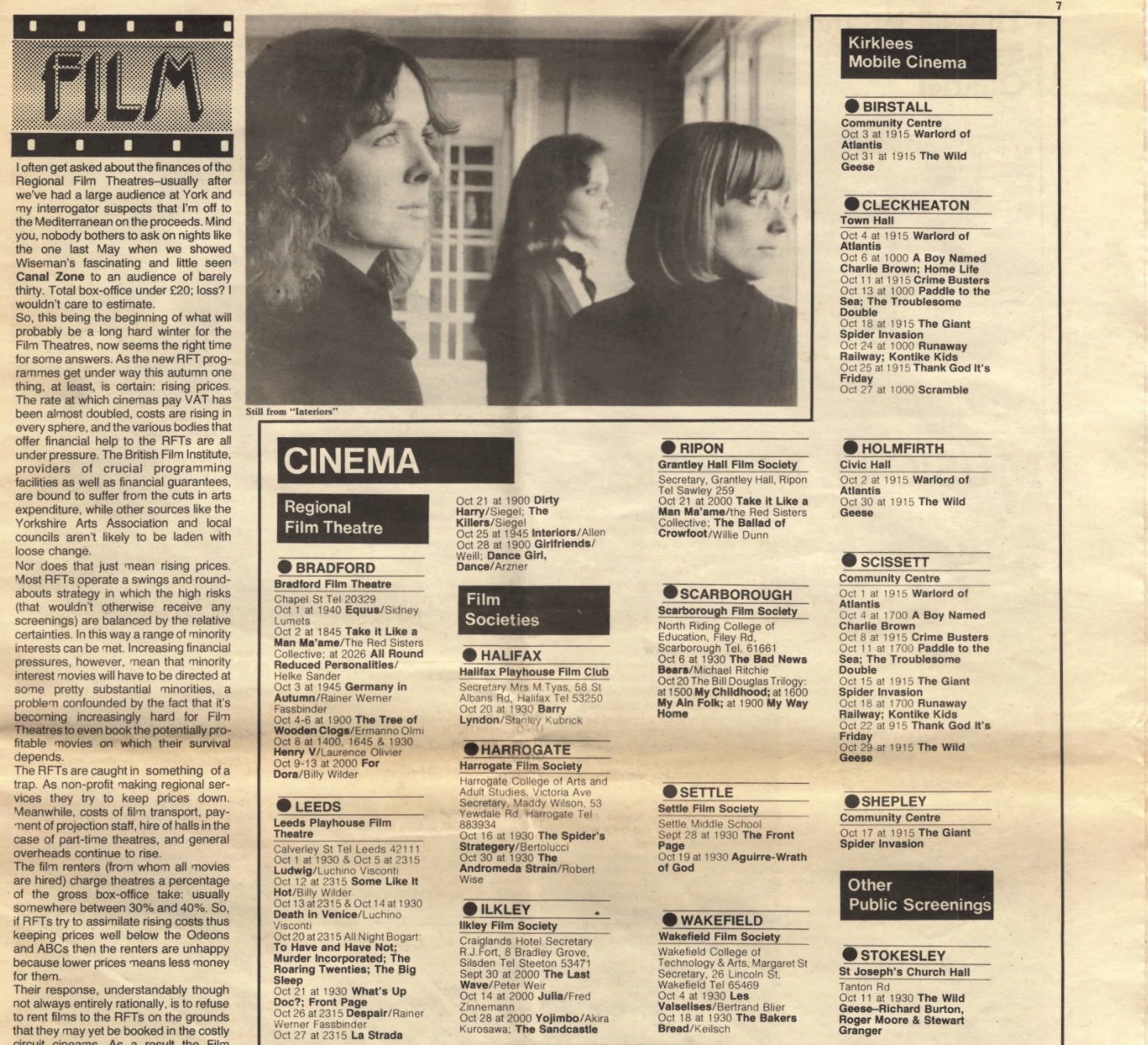
Art Yorkshire Magazine - October 1979
Alongside the minor / major productions during the 1970s the Yorkshire Arts Association (YAA) established a host of policy initiatives that sought to develop platforms for education, access, and distribution. And, while the emphasis certainly swung towards production funding, these schemes and movements are worth discussing here, as they remained an important part of activity. Nina Hibbin’s original remit for growing the film culture of the region was to emphasise the importance of the Regional Film Theatre (RFT) network. The BFI-backed RFTs were first established in 1966 in Nottingham, and by 1970 there were 36 theatres in the country.[1] In Yorkshire the main RFT sites were in Bradford, Hull, York, Leeds, and Sheffield. The conception of the RFT was instigated by the loose swing toward regionalism in BFI policy and arose from the existing local film society network prevalent around the country in the 50s and 60s. As Newsinger suggests, ‘exhibition outside London was heavily dependent upon film society volunteers and upon the enthusiasm of people dedicated to the maintenance of region film theatres’.[2] Once the BFI engaged with funding the YAA in the early 70s, it was apparent that they would use the RFT network to expand on how film should serve as a cultural activity. This is borne out by the listings for the RFT’s in Yorkshire which are dominated by BFI-endorsed European cinema and classic Hollywood product. Film historians Melanie Selfe and Ian Christie have written extensively[3] on the RFT network and both concur with this pattern, and Jim Pearse of the YYA himself told me that the BFI weren’t particularly interested in taking on independent regional film into their distribution circuits.
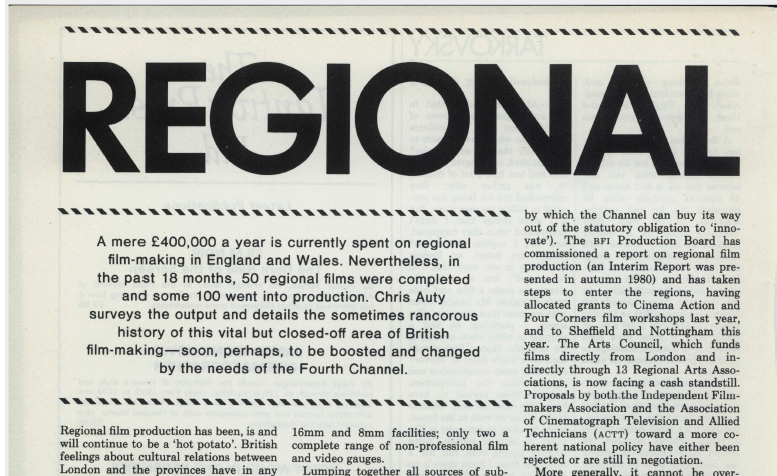
Auty Chris. Monthly Film Bulletin London Vol. 50 Iss. 3 Summer 1981, p154
Outside of the subsidised RFT network, the long-established film societies in Yorkshire continued without BFI support, and in 1978 Pearse introduced a new set of policies for those societies seeking help via small YAA grants. The guidelines were designed to encourage new societies to apply for establishment grants, and those existing groups curating ‘special events’ (based on seasons of film or related to local events) would be more likely to receive funds. Furthermore, if a society was in financial difficulty, the YAA offered help in raising money from other sources. And while the panel did not normally grant awards for the purchase of capital equipment (projectors, sound facilities etc.), the YAA would act as liaison to seek assistance from the British Federation of Film Societies (BFFS) to help source necessary equipment.[4] This active, yet hands-off, approach to supporting the region’s film societies is redolent of a YAA strategy (under Jim Pearse) that was keenly focused on developing the means of professional production, rather than indulge the activities of an amateur film society network. However, it can be said that this particular strategy was, in hindsight, a limited one. For a healthy and successful film culture ‘production, distribution and exhibition exist in a symbiotic relationship: to thrive, each sub-sector requires the cooperation and support of the others across the value chain.’[5] These words were written in 2021, but they resonate through the PYS history. Perhaps if the BFI/YAA/Pearse had invested more heavily in well marketed and well supported local distribution and screening networks and audience development, alongside chasing bigger budgets for production, the sustainability of the grant-aid sector may have been stronger. As Auty describes in the 1980s; ‘the fatal weakness [author’s emphasis] throughout the system is EXHIBITION [author’s emphasis]: without outlets, film-makers cease to think of films for audiences; and without films geared to recognisable consumers the argument for more state funding seems weak and irresponsible.’[6] Nonetheless, the YAA did continue to back the film societies in the region throughout the late 70s and 1980s through small grants (out of BFI-duty more perhaps), and unfortunately for the local film exhibition scene, and the RFTs especially, external circumstances contributed to an ongoing state of under-funding.
In 1979, the annual conference for RFTs started as a way for the BFI to better communicate with the RFTs and the RAAs. The conference report suggested that the RFTs were established in partnership with existing film societies and supporters, and their activities reflected the strength and character of their local film culture, and this philosophy should be encouraged.[7] This was evidenced by the 70s RFT listings which continued to be featured in the monthly Arts Yorkshire paper. However, opinion pieces such as the one in an October 1979 edition write about a less optimistic climate. The article, by Andrew Tudor, illustrates how the RFT funding climate was confused, and that the network in Yorkshire faced a ‘long hard winter.’[8] He writes of a landscape where cinemas had to pay a double increase in VAT (meaning rising ticket costs) amid local government cuts to arts spending. The net result of straitened budgets and programming ‘minority’ interest films meant it was ‘becoming increasingly hard for Film Theatres to book the potentially profitable movies on which their survival depends.’[9] The situation was clouded as premises became rented on a basis of gross box-office take, and so if RFTs ‘attempted to assimilate rising costs to keep tickets low, then landlords became ‘unhappy because lower prices means less money for them’.[10] This only served to limit choices available to RFTs and, crucially according to Tudor, could ‘spell an end to RFT programming policy, and ultimately, to the whole attempt to make available to the rest of the country films usually only shown in London’.[11] It is significant that even in the foremost external pressure group of the time, the IFA, the discourse was one seriously loaded toward production and the possibilities offered by television. Models in developing cinemas, distribution, and exhibition platforms remained peripheral. One reason for this is that the London arthouse circuit network (the domain of many IFA members) already catered for alternative film screenings; outside the capital however everyone else was not so fortunate.
Therefore, it is significant that distribution problems were at least attempted to be answered in Yorkshire in the 70s. Nina Hibbin was responsible for the foundation of the Yorkshire Shorts Distribution Library, which was established to circulate both commercially available mainstream features to local film societies and to provide a platform of distribution for local film-makers. This was an important, if nascent, development and in 1976 the catalogue featured 25 films while receiving requests from local and national venues, including London cinemas.[12] At this stage, however, it was still difficult to penetrate the hegemony in any great numbers, and any quantifiable reception figures remain absent. The BFI and its RFT network remained largely apathetic to the exhibition of local independent material, so having an in-house distribution library (administered from Bradford) at least provided the possibility for wider coverage. However, it is understood that early take-up of this project was slow, and it wasn’t until the catalogue expanded in the early eighties, and VHS arrived, that the mechanisms of distribution became easier.
Although the official BFI endorsed RFT network faced an uncertain future at the end of the decade, alternative spaces for programming independent cinema were already being mooted. In 1975 a YAA paper on the possibility of municipal involvement in the rescuing of failing cinemas was circulated to ‘local authorities and aroused considerable interest.’[13] This was driven by former Rank Organisation official David Williams who oversaw the three-screen independent venue in Sheffield, Cineplex. Later in 1983, this same venue became the Anvil Civic Cinema funded entirely by the Sheffield City Council.[14] Elsewhere, venues like the YAA sponsored York Arts Centre and the Bradford Playhouse were exploring different ways in which the new independent cinema could be fairly represented on screen. However, it is safe to conclude that during the 1970s, this sector was very much in gestation; as a result, the remaining chapters in PYS will look at ways in the which the mechanisms of YAA sponsored exhibition and distribution evolved further into the 1980s.
In this period of the early 1970s, we now see that the YAA began to take film to neglected communities. The YAA - and particularly Barry Callaghan - endorsed the film education programme ‘Second Sight’ where film was brought into the classroom to involve children in the beginnings of the creative process. Following Local Government reorganisation, the group relocated from its brief spell in Hull (now part of the Humberside boundary) to Sheffield’s Hurfield Campus. In Redcliffe-Maude’s influential Gulbenkian report on the arts, he suggests that ‘Second Sight’ was something of a pioneering scheme in a national culture that showed ‘little interest’ in film education for schools, where the ‘aesthetic, social effects and history of film and television receive only sporadic attention.’[15] He then argues for a greater connected involvement between the BFI and the RAAs to achieve this. That the YAA’s ‘Second Sight’ initiative paved the way for a greater emphasis on education provision for film is an important milestone and is evidenced by the consistent grants and guarantees allotted to educational film initiatives year-on-year.
Another Hibbin policy driving the endeavour for access was the ‘Rural Film Programme.’ Sponsored by the Gulbenkian Foundation, the programme paid regular visits to 15 rural villages in the North Yorkshire Moors, to those parts of the region no longer served by a commercial cinema. The mid 70s also saw the development of mobile projection units rolled out in areas like the Kirklees District.[16] It is perhaps little surprise that Hibbin was an advocate of the mobile cinema, given its legacy in Left film exhibition.[17] The needs of the mobile unit were most keenly felt in the rural districts of the Yorkshire coast and surrounding moorland areas. In 1979 the YAA granted £2000 to the Northeast Film group unit who offered a unique combination of mobile cinema (presenting commercial and local material) and a film workshop producing documentaries about rural North Yorkshire.
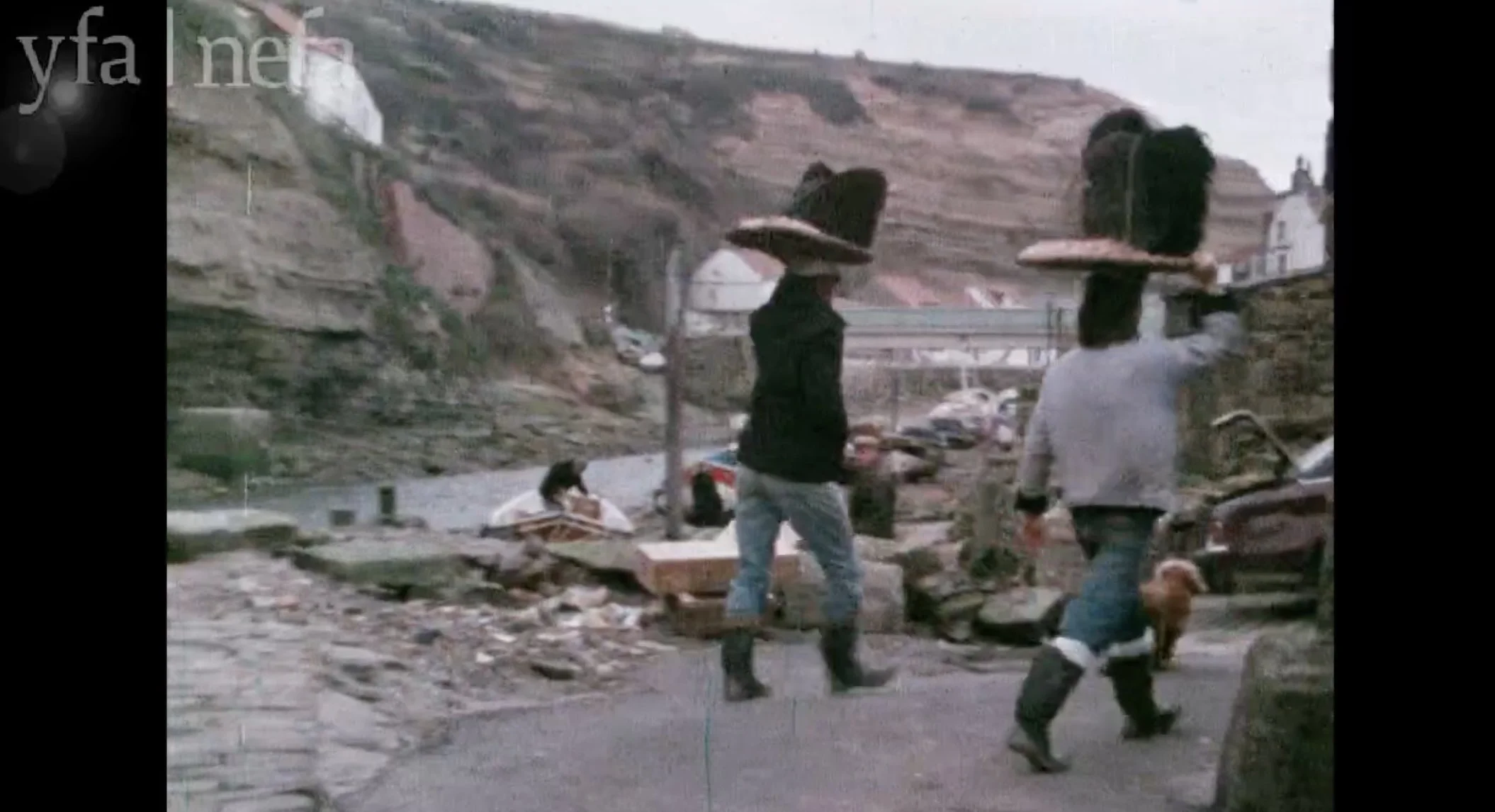
The twenty-minute film, Staithes Lifeboat Weekend (Dir. Peter Bell) was a well-financed example of this trend. The film itself is about the community festival held every year in August in the fishing village, set-up to help fund the local lifeboat service.[18] However, these types of activities, while noble, were redolent of a wider YAA film policy that failed to accurately represent the heterogeneous nature of the large geographically and economically diverse region it was supposed to cater for. Provision for film education, production, and exhibition remained the reserve of the educated urbanite.
The trend in 1960s Britain for experimental theatre, mixed media practice, and the Arts Lab movement has been explored elsewhere in my research, however these growing developments gathered pace in the 1970s. The ACGB set up the Experimental Projects Committee in 1970 to handle the increase in applications from groups around the country. In 1973 a working party met at the ICA in London to examine the nature of the expanding Community Arts scene in Britain and to ‘advise the Council on what should be the extent of its own role and involvement in this development.’[19] A year later the ACGB published a report by Professor Harold Baldry, laying down its vision for this emergent activity over the next decade. The paper defined the new Community Arts discourse along three broad parameters (to use Community Video historian, Ed Webb-Ingall’s formulation):
1- SPACES. Self-organised and collectively run. A multi-media, multi-discipline practice to help dissolve the boundary between audience and artist or object.
2- EXPRESSION. New aesthetic forms to represent previously marginalised groups.
3- PERSON. A new kind of political activist who believes that creativity is an essential tool in any kind of radical struggle.[20]
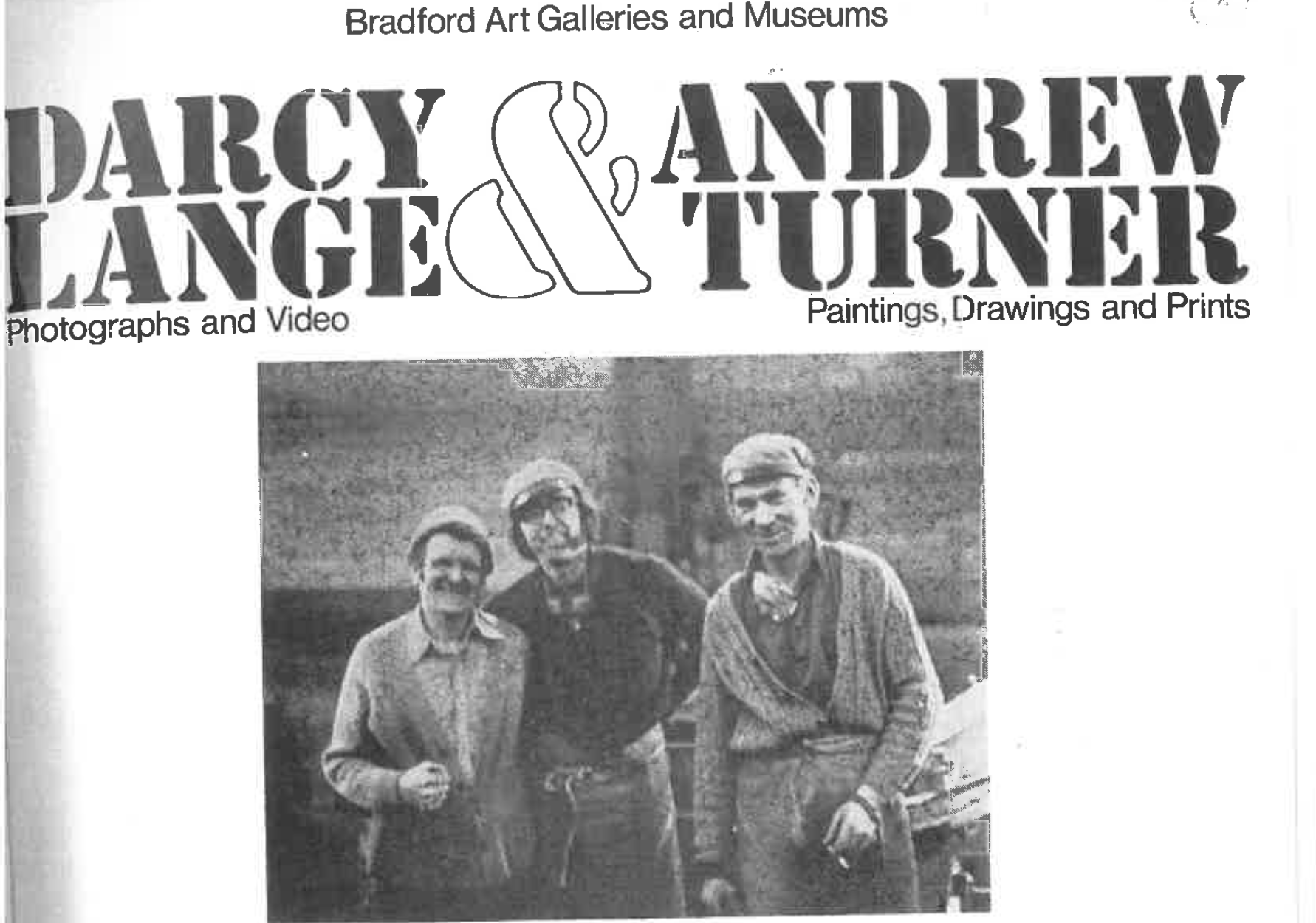
If we then take Webb-Ingalls’s conception that Community Video ‘groups found ways to challenge single authorship by dissolving the relationship between filmmaker and subject,’[21] then the documentary work of Darcy Lange in Bradford is the earliest example of this framework being applied in Yorkshire. Born in New Zealand, Darcy Lange began his career in the late 1960s as a sculptor but soon turned to photography, film, and video. In 1971 he began videotaping and filming under the theme of ‘people at work’ in rural, industrial and educational contexts in Britain, New Zealand and Spain.[22] His 1974 piece A Documentation of Bradford Working Life was commissioned by Bradford Art Galleries and Museums with the ancillary support of the YAA. His approach was to film people in Bradford over a period in different industrial contexts, to ‘reveal social truth’[23] through the medium of video. Shooting at Osborn Steels Ltd, Whiteheads Woollen Mills, Hepworth and Grandage Ltd., and the mail order warehouse, Grattan Ltd., Lange’s finished project (running to 15 videos at 1hr 45mins) was designed to ‘convey the image of the work as work, as an occupation, as an activity, as creativity and as a consumer.’[24] These observational pieces were different in the way Lange allowed his subjects to speak, react and engage with the camera. Industrial workers from Yorkshire were given a platform for the first time - the very distillation of what Community Video was beginning to explore.
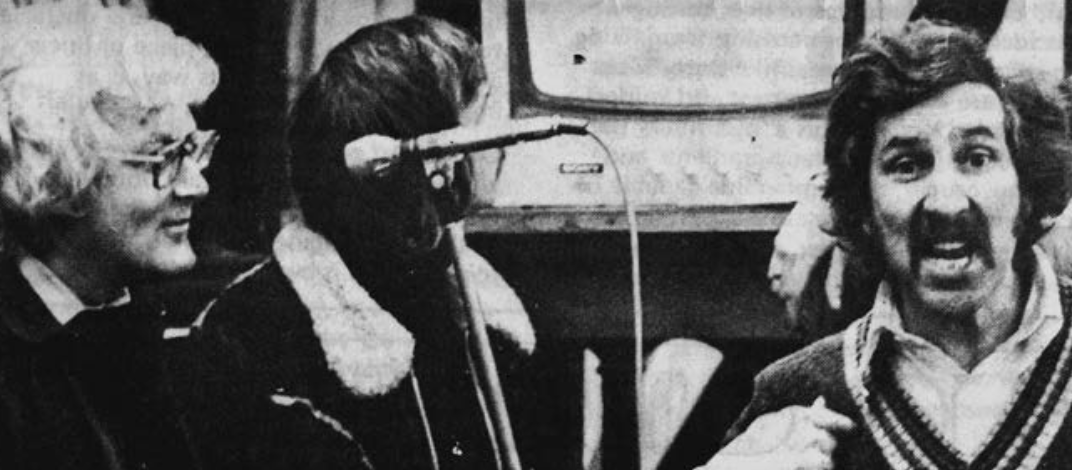
Albert Hunt, Ken Sparne, Roger Simcox, Bradford, 1970s
The ACGB Community Arts report also details a series of research meetings held in 1973, and includes a meeting with Nina Hibbin, visits to the Red Ladder Theatre company in Leeds, to Interplay in Armley, and Play Space in Bradford (where Albert Hunt was active).[25] By the mid-70s, as more and more portable video equipment landed in the region, interest in Yorkshire was increasing dramatically and the YAA had to respond accordingly. Before Jim Pearse took over at the YCC, Ken Sparne was in charge as technician at the nearby Bradford Art College, supporting the work of Albert Hunt with equipment such as the Sony Portapak[26] donated by the Gulbenkian Society. When he arrived at the YAA, Pearse began to oversee use of the equipment and ran workshops for local community groups, formalising activity as a core part of the YCC, rather than the Bradford Art College. As Pearse suggested to me, ‘Video was the thing and people really liked it. There was a lot of rhetoric around video, it was conflated around the idea of television. It was on a screen. It seemed quite radical.’[27]
In Sheffield, the closure of Cablevision prompted the formation of Sheffield Community Television Committee led by ex-Granada researcher, Nick Smart. In 1976 he set up the group Sheffield Video Workshop (SVW) and applied to the YAA for a grant to purchase equipment for community projects. After initial interest, Smart recalled that the YAA film officer (Pearse) didn’t approve of the SVW work: ‘what we weren’t doing was making independent films in the well-worn arty sense as an independent film-maker in Yorkshire.’[28] Smart claims that Pearse ‘needed to know our audience … he didn’t understand that we were only at the start of our research.’ As a result, the SVW had to return the video equipment. This is borne out by an exchange with Pearse in 2018 who commented that video was a ‘nightmare to use … terribly vulnerable,’ further evidenced by the focus towards 16mm and then 35mm film production - thereby undermining the nascent video movement.
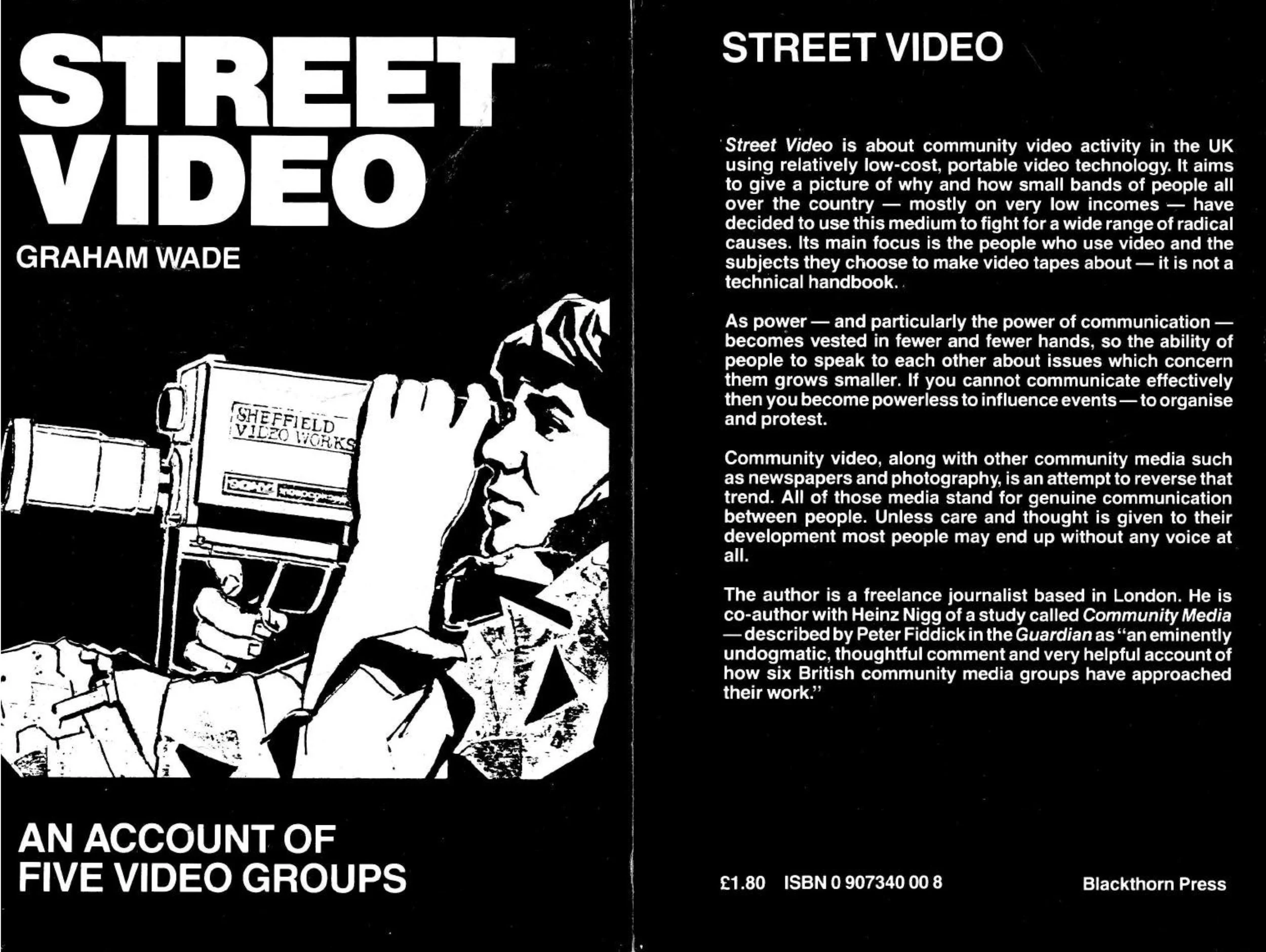
Strret Video, Graham Wade, 1980
Despite this rejection from the YAA, SVW acquired facilities through private funding streams such as the Manpower Services Commission and helped produce work with local political groups the Anti-Nazi League, the Chile Solidarity Committee, various trade unions, and also the SCC education department. The group shot upwards of 200 hours of materials within the Sheffield community. Sadly, much of this material is still to be discovered. Summarising the SVW activity in 1981, Nick Smart strikes at the heart of how Community Video sat uneasily within the grant-aid funding culture at the YAA: ‘SVW is one of relative independence and self-sufficiency. It proves that a video group can exist, creating meaningful links within a community, while receiving little direct subsidy, but rather selling its skills without compromising its principles too much.’[29] As a result of these ideological and aesthetic differences with the format, the YAA’s funding of community video groups and practitioners in the 70s and early 80s remained at a low level, firmly ensconced in the ‘minor productions’ grants section. It wasn’t until the mid-1980s that community video was supported more widely. The research will elsewhere discuss initiatives like the ‘Second Screen’ access project at Bradford Playhouse, and the surfeit of YAA supported community video groups which emerge in the region such as Leeds-based Video Vera, Sheffield Media Unit, and York Video Workshop.
///
Footnotes
[1] BFI, “The BFI in the Regions” (London: BFI, 1970) p.7.
[2] Date unknown
[3] https://scispace.com/pdf/the-cultural-burden-regional-film-policy-and-practice-in-4t316d53z8.pdf
[4] Arts Yorks, November 1978
[5] Making It Real report, 2021, page number
[6] Auty Chris. Monthly Film Bulletin London Vol. 50 Iss. 3 Summer 1981, p154
[7] Jack Newsinger - https://eprints.nottingham.ac.uk/11175 p80
[8] Arts Yorks, October 1979
[9] ibid
[10] Tudor - October 1979 - Arts Yorks
[11] Tudor - October 1979 - Arts Yorks
[12] YAA report 76/77
[13] YAA reports 1975
[14] Anvil. SCC which became heavily active in its support of the emergent local film production culture.
[15] Gulbenkian Report - 165
[16] report 75/6
[17] In the post-war years, the National Film Association (NFA) established a mobile cinema circuit as opposition to the passive act of watching a propaganda film in conventional cinema. Here, in Hogenkampf’s words, the political film shown at a village hall with an introduction, could ‘very effectively underline the personal approach of a public speaker and perhaps even attract a new type of audience’ (Hogen - 33). During these years the NFA also began to formalise links with Trade Unions to show their work.
[18] Reel Practices. Page Unknown.
[19] Community Arts Report - Baldry p.1
[20] Ed Webb-Ingall in Mulvey. P.126
[21] Ibid. p136
[22] Unknown
[23] Exhibition programme 1974
[24] ibid.
[25] Community Arts Report - appendix
[26] Interview, Jim Pearse
[27] Wade Street Video / smart p15
[28] Wade Street Video / / smart p.22
[29] Wade Street Video / / smart p.22