The Yorkshire Arts Association – Foundations – Part 5 – Richard Woolley, Cablevision, and The Sheffield Film Co-op
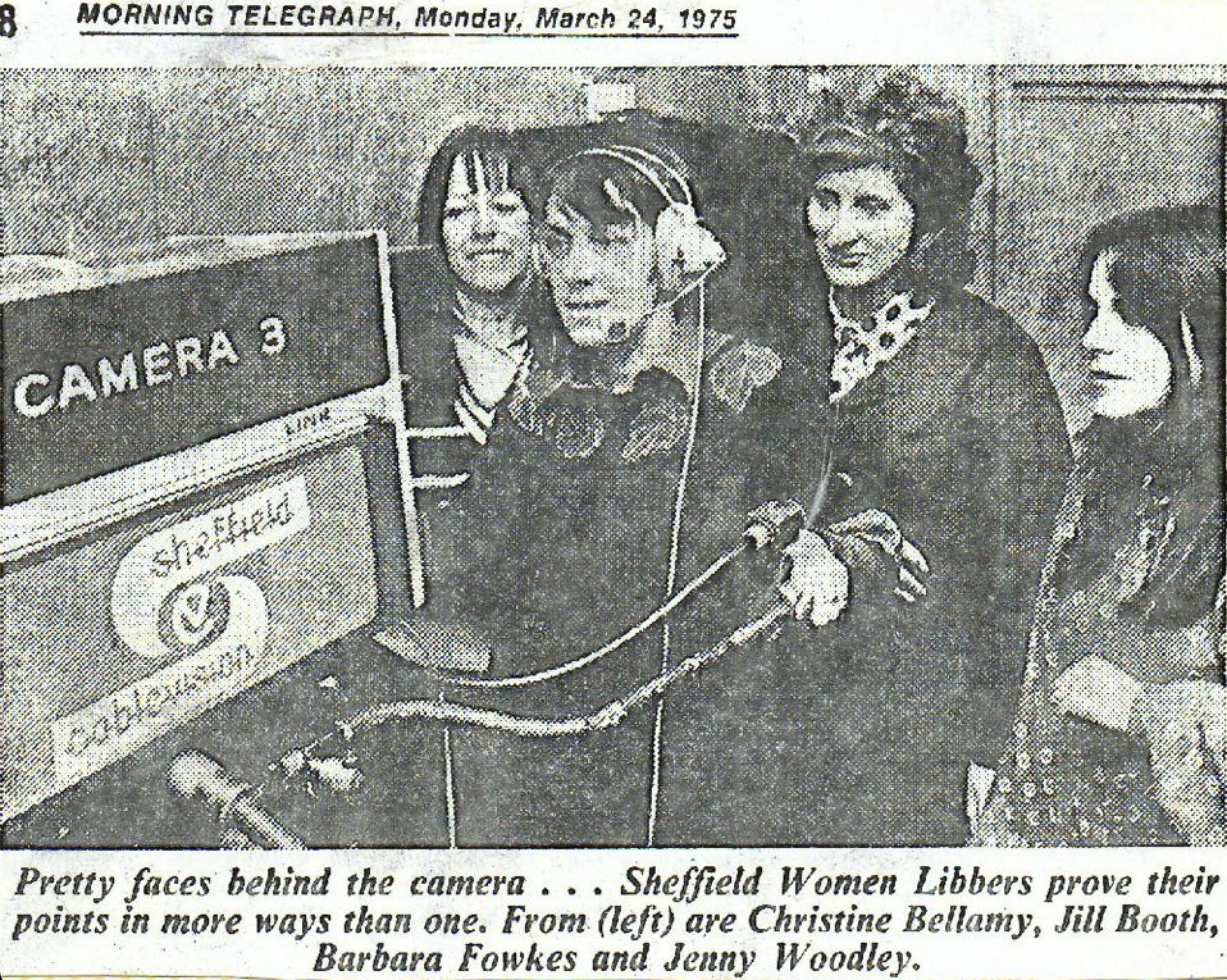
Soon to be Sheffield Film Co-op members behind the Cablevision cameras, 1975
Two of the most internationally recognised names to have emerged during this mid-70s period are the Sheffield Film Co-op (SFC), and Richard Woolley. Their oeuvre has been well-historicized[1] so this is not the platform to discuss Woolley and the SFC at any great length. Similarly, the umbrella group established in 1976, Sheffield Independent Film (SIF), had a great impact on the regions’ film-making culture yet its history formed an extended case study by this author in 2016.[2] However, it would be remiss not to emphasise the importance of their contribution, particularly within this period of YAA moving image development during the 1970s.
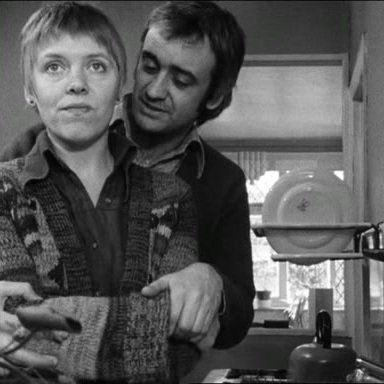
Telling Tales (Richard Woolley, 1978
After graduating from the RCA and following a spell making structuralist film in Berlin, Woolley moved to Chapeltown Leeds in 1973, feeling ‘suspicious of London … it was very middle class’.[3] This is perhaps a telling anecdote in itself, as middle-class flight to somewhere more ostensibly exotic, dangerous, and cheaper (i.e. Yorkshire) was a well-worn idea during this period. Woolley resumed the communal living conditions of his Berlin days amongst politically (Left) engaged students, graduates, artists, and the recently relocated Red Ladder theatre group. Within a year of being in West Yorkshire, Woolley met Film Officer Jim Pearse and proposed a film project to the YAA. Given his growing reputation as an avant-garde film maker in Berlin, Woolley also sought supplementary funding from the ACGB experimental fund. He managed to source £5,000 between both parties. The grant was successful and the result, made with equipment resource from the YCC Bradford, was the thriller (‘a strange film by anyone’s standards’, said Woolley) Illusive Crime (1976). His next major project Telling Tales was rejected by the ACGB on the grounds of being too closely aligned to ‘realist television drama’ for their strict avant-garde selection criteria. Pearse’s tastes, however, were ‘totally eclectic…’ so Woolley ‘threw together completely contradictory styles and the YAA didn’t mind’.[4]
One aspect largely missing from the nascent YAA Film TV panel, and its work, was Television itself – especially the means and the modes of distribution. In 1972 the BBC2 established the Community Programmes Unit with a remit to focus on access and exhibition for local communities using newly accessible portable video technologies like the Sony Portapak. Propelled by activist voices like John ‘Hoppy’ Hopkins community video was given its official platform through the BBC series, Open Door. A year later the Conservative government saw the commercial potential of this new medium and granted its first licences for the origination of programmes on local television networks. The first of the stations granted permission in 1972 was Greenwich Cablevision in Southeast London, followed by networks in Bristol, Swindon, Wellingborough, Milton Keynes, and Sheffield. The Cablevision studios were based at Matilda Street Sheffield and with British Relay money acquired equipment[5] and studio space which included a production technical area, transmission control room, news and continuity studios. It sat in the frequency band on the fourth channel and coverage was locally restricted to transmission time on community problems, sports clubs, building developments and municipal affairs. The station launched in Sheffield on September 1st 1973. Cablevision still needed a local creative element to make programming worthy of the community ethos at its heart, however. In a city with little history of broadcasting (let alone infrastructure) this talent pool emerged from an unlikely source.
Sheffield was bypassed for the siting of the original ITV contract[6] and so local radio station BBC Radio Sheffield (est. 1967) was the sole broadcast voice in the city.[7] It was at the BBC where four local women met Education Officer, Dave Sheasby, who suggested that they make a series of local radio programmes entitled Overall Not Just a Pretty Face, each exploring different demands of the women’s liberation movement.[8] In 1971 issues that were at the forefront of this moment included: equal pay, education and job opportunities, free contraception, abortion rights, free twenty-four hour nurseries. Christine Bellamy, a young mother herself, joined forces with Jenny Woodley, Gill Booth and Barbara Fowkes to make the radio series. Sheasby taught them how to edit and record sound professionally and the women soon seized on the new technological opportunities which Cablevision offered. The technical department at Cablevision was a male dominated environment and when Bellamy, Booth, Woodley and Fowkes approached the station to make a film about the poor provisions available for Sheffield mothers and their children, they were met with laughter: they thought ‘[we] were a joke ... referring to us as “our four housewives.”[9]
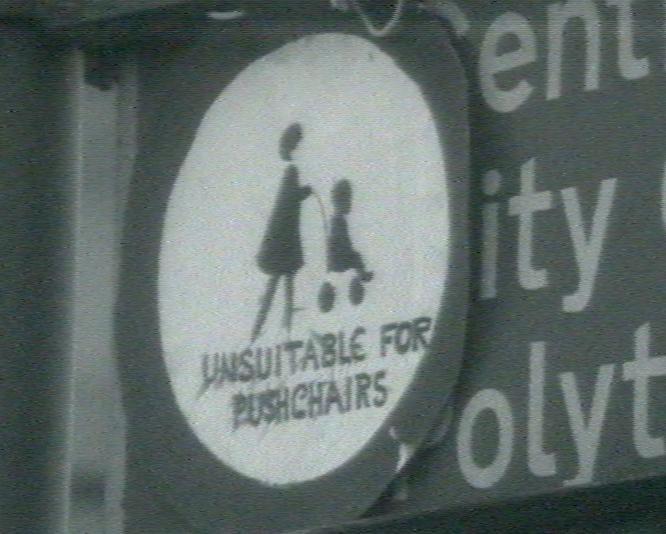
Women and Children Last (1974)
Women and Children Last (1974) was their first production for Cablevision and, despite the challenges and discrimination they faced from male engineers, the process was an invaluable learning platform in the mechanics of making a TV programme. Bypassing the traditional hierarchical nature of TV production, the women made Women and Children Last by allowing each member equal time on each aspect of the process; they were all director, cameraperson, interviewer, editor.[10] This spirit of collaboration was in evidence on their second Cablevision piece, a plea for more nursery places and child minders for working mothers, Mind My Child (1975). Speaking to the local press Woodley admitted, ‘the film obviously had its technical shortcomings, but Cablevision has given us the opportunity to make our own programmes, have total control over the content and presentation, and access to the video equipment.’[11] The group’s next proposal, A Woman Like You (a film about women’s choice over abortion) was dismissed by the station, uncomfortable over its subject matter sitting next to local sports coverage, celebratory civic events, and mainstream pop concerts. The project resurfaced with the backing of the YAA, and the four women collectivised as the Sheffield Film Co-op (SFC). Speaking in 1990, SFC’s Gill Booth remembers Film Officer Nina Hibbin and the YAA ‘grant process’ fondly, and her reflection is worth quoting here in full as another example of the free-form, slightly anarchic, way in which projects were financed in the early seventies:
‘When we made A Woman Like You, I had to go over to Bradford to see Nina Hibbin, she was a fantastically busy woman. When I got there, she had to go to the doctor’s, so we raced out of her office into her mini and up to her doctor’s waiting room and conducted most of the conversation in the waiting-room. It was the early years of the Women’s Movement and she was an older woman of a type I’d not come across before - very lively and radical and getting on for 60. Anyway, she gave us a start and our first grant - of £100’.[12]
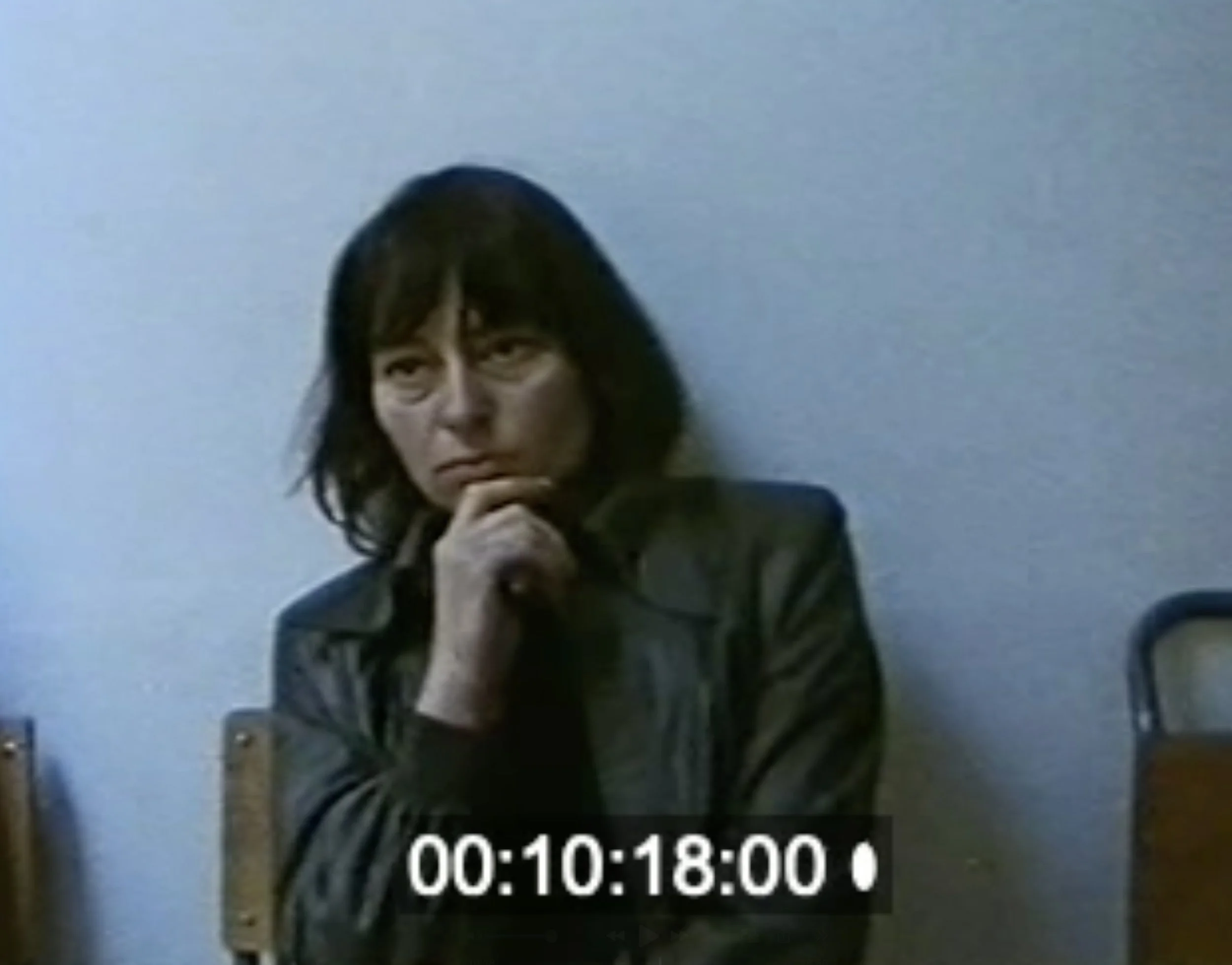
A Woman Like You
Barry Callaghan was pivotal in the production of A Woman Like You. He encouraged the SFC to apply for a grant and promised them that the Polytechnic would provide supplementary equipment. Further to the YAA funds, the SFC acquired £300 from the British Pregnancy Advisory Service, £25 from Lady Gardiner (a member of a Yorkshire-based suffragette group), and £10 from pressure group, Women In The Media.[13] In fact, the very naming of the SFC arose because as Booth and Woodley recall ‘the rudimentary YAA application form asked for the name of an organisation and we were just four friends from Sheffield!’[14]
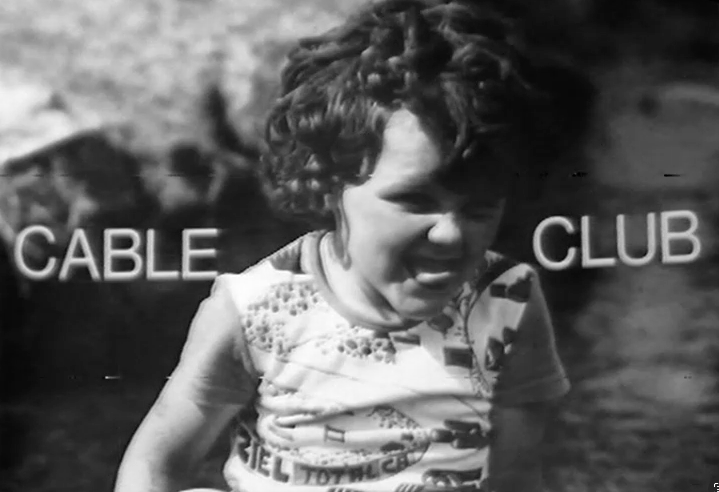
Cablevision programming
Unfortunately, by 1975, Cablevision did not make a profit and audience reach was not big enough for business investment and the new Labour government began dissolving the cable television network. Cablevision ceased broadcast on January 2nd, 1976 and with the exception of Swindon Viewpoint,[15] the UK-wide local TV experiment closed operations by the end of the year. The Cablevision pilot was only fleeting, yet it remains an important moment in the development of moving image culture in Sheffield. In a large city without a major broadcaster Cablevision offered a space for individuals to learn the craft and work with professional film and portable, low-gauge video equipment for the first time. The Cablevision experiment provided motivation and newly discovered technical skills to a group of film-makers who would serve as important agents in the ongoing development of the YAA.[16] In the minutes of a YAA meeting a few days after Cablevision closed, Barry Callaghan ‘reported on the closing down of this scheme and his opinion that the equipment and premises not be wasted’.[17] He, and others, ensured this loss would be turned into opportunity as momentum gathered pace during the second half of the 1970s, and the story only serves to emphasise the connectedness of Cablevision and the YAA.
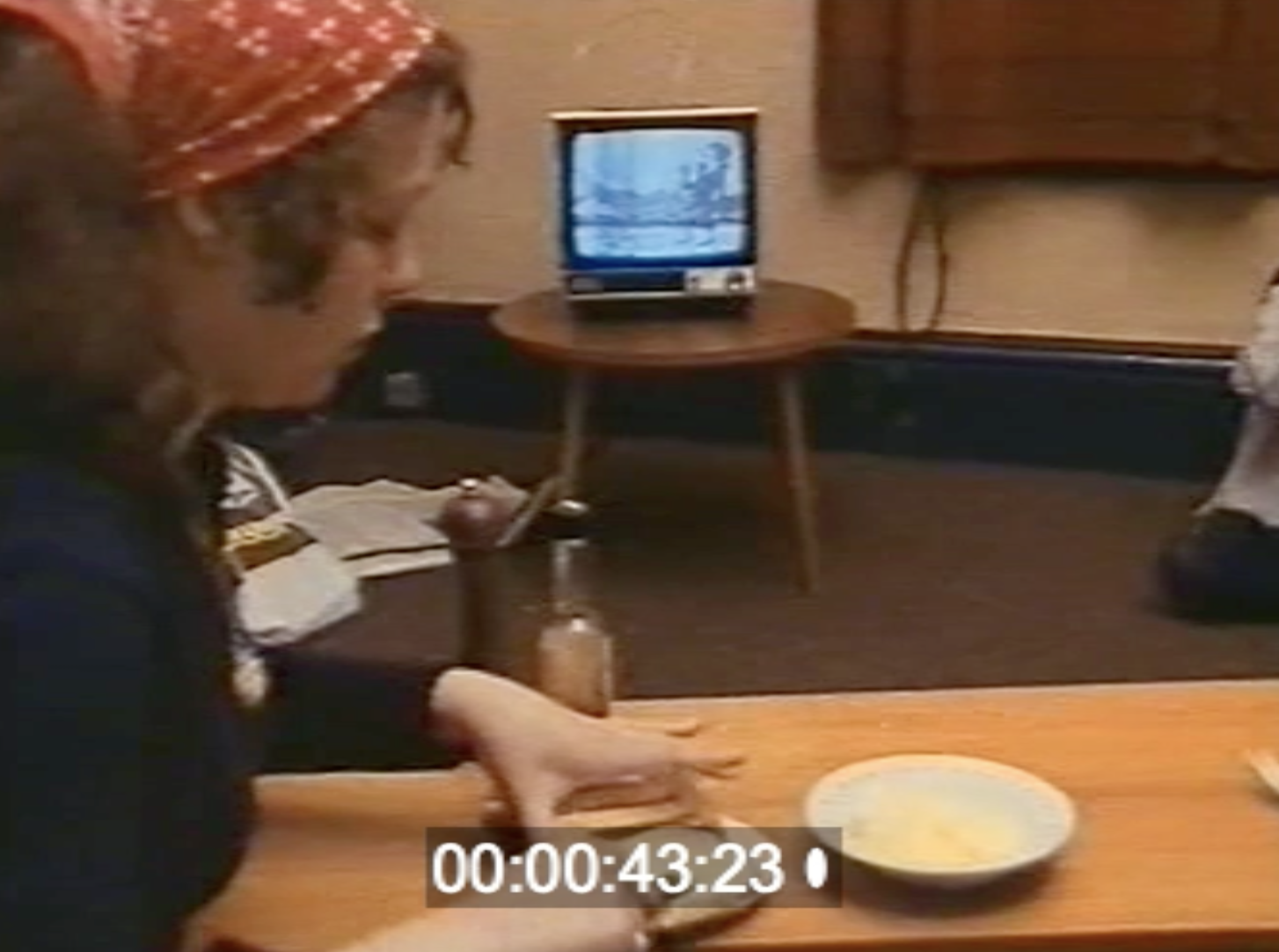
That’s No Lady (1977)
The YAA supported two more SFC productions in the decade: 1977’s fiction/documentary short about domestic abuse (That’s No Lady), and the ‘the story of a girl leaving school who decides to train as an apprentice mechanic and get a job in a garage’, in Jobs For The Girls (1978). Both productions still stand as totems in the SFC catalogue, with former members of the group describing them proudly as ‘accessible and powerful … there’s still nothing about it around, which is pretty appalling really’.[18] Learning from the experiences of their first YAA film, the group capitalised on the possibilities offered by the opportunity for co-funding. The former sought extra finance from the Women’s Aid Federation, while the latter was aided to completion by the Equal Opportunities Commission and the Careers and Occupational Information services. This shrewd pragmatism served the SFC soundly, and their partnerships with charities, local authorities, and ultimately Channel 4 helped sustain the group for long into the 1980s where others reliant strictly on YAA funding disappeared with view.

SIF CATALOGUE (1981)
One thing that both Woolley and SFC had in common was their relationship to the umbrella group Sheffield Independent Film (SIF). In 1976 a group of aspiring film-makers, students and scholars from the Sheffield Polytechnic established SIF to help emerging film and video makers and to facilitate moving image activity in the city. Following an initial grant - to provide 16mm equipment - from the Gulbenkian Foundation, SIF spent the remaining decade growing equipment provision, expertise and facilities while supporting the burgeoning independent scene in the city. To supplement this expansion, the group established an annual grant revenue stream from the YAA allowing the group to instigate an administrative structure, which formed the basis for all its integrated activities. I have written extensively on the genesis and historical development of SIF as part of a Masters By Research project[19] so this is not the platform to run over those same themes. However, it is important to locate SIF in the framework of the YAA film policy and briefly discuss the role it played in shaping the progress of independent film and video in the region more generally. In 1977 SIF received their first significant funding boost from the YAA to the sum of £4959, paid as a general subsidy to cover operations.[20] Reflecting on this move in the Annual Report, Jim Pearse suggested it was part of a wider policy emphasis on supporting production centres (following the successful take up at the YCC), and with Sheffield filmmakers driving much ‘initiative for independent film-making’ the panel saw no reason but to ‘strongly encourage the SIF development.’[21] This is evidenced by the exponential growth in YAA to SIF funding. A year later (78/79) SIF received a £5,600 grant from the YAA to move into new premises where they established 16mm editing and production facilities. Reflecting Sheffield’s prominent position as the central production hub in the region, six films were completed in 78/9 using this newly acquired equipment including Woolley’s Telling Tales, SFC’s Jobs For The Girls, and Peter Care’s social-realist drama, Future Blues. In the four years since it was founded, SIF became one of the major recipients of capital income from the YAA; the group had several eminent individuals who made films in the region (many of whom sat on the Film & TV panel) and they entered the new decade with a confident strategy on the best means to grow production and integrated activities further still. Their relationship with the YAA became entrenched…
///
Footnotes
[1] https://www.richardwoolley.com/film/dvds/
[2] MRes link - http://shura.shu.ac.uk/16221/
[3] Woolley interview. - 2018
[4] Woolley Interview - 2018
[5] Equipment came from de-commissioned ITV cameras, 16mm/35mm telecine and VTR machines.
[6] In 1967, Yorkshire Television won the pan-northern franchise and was founded in nearby Leeds.
[7] Hallam FM launched in 1974 as the commercial alternative.
[8] Becoming SFC – Angela Martin, https://womensfilmandtelevisionhistory.wordpress.com/2014/04/04/becoming-sheffield-film-co-op/, accessed 15 January 2016
[9] Ibid.
[10] P. Roberts, ‘TV Mums Show Up City Centre Shopping Problems’, in Sheffield Telegraph, 1974.
[11] P. Roberts, ‘SFC’, Sheffield Telegraph, 9 July 1975, p.12.
[12] There’s Plenty More… - Gill Booth - p.78/9
[13] BFI Catalogue Entry Unknown
[14] There’s Plenty More… (YAA Book) - Booth/Woodley - 91
[15] Swindon were given a generous endorsement by the nearby EMI factory. Anon. ‘Local TV-Radio & Syndication: Cable Station Exits; Only 1 Left’, in Variety 281.10, January 14, 1976, p. 55.
[16] Another Cablevision alumnus was Nick Smart who went onto form Sheffield Video Workshop (SVW).
[17] Yorkshire Arts Association, Arts Council of Great Britain Records (1927-199), Victoria and Albert Museum. Archive Boxes - ACGB/111/5, Minutes of the meeting of the Film and TV panel held at YTV, Leeds on Monday, 5th January 1976.
[18] There’s Plenty More… - Gill Booth - p.78/9 - p.14
[19] http://shura.shu.ac.uk/16221/
[20] YAA Report 77/8
[21] ibid - YAA Report 77/8